By John Ritchie
How a new generation of Catholic boys is fortifying its Faith in a lost world by following in the glorious footsteps of the crusader saints
Far from dead, chivalry is a luminous ideal that awakens the best within the human soul. Kenelm Henry Digby defines it as “that general spirit or state of mind which disposes men to heroic actions, and keeps them conversant with all that is beautiful and sublime in the intellectual and moral world.”
Get information about the next camp here.
Forming Men of God
In a culture that applauds immoral celebrities and Hollywood stars as models of manhood, many parents ask a pressing question: Where can boys grow into men of God? Where can they learn to pursue virtue, embrace noble ideals, and strive for all that is beautiful and sublime?
Over the summer of 2026, boys from across the country attended TFP Call to Chivalry camps. Unlike most camps, the program stands in a category of its own, offering a daring invitation to this generation to leave TikTok, video games, and smartphones behind and soar like an eagle into the world of saints, swords, and knighthood.
This year, St. Louis de Montfort Academy in Herndon, Pennsylvania, hosted the flagship camp, while additional camps in Louisiana and Indiana extended the program’s reach to families across America.
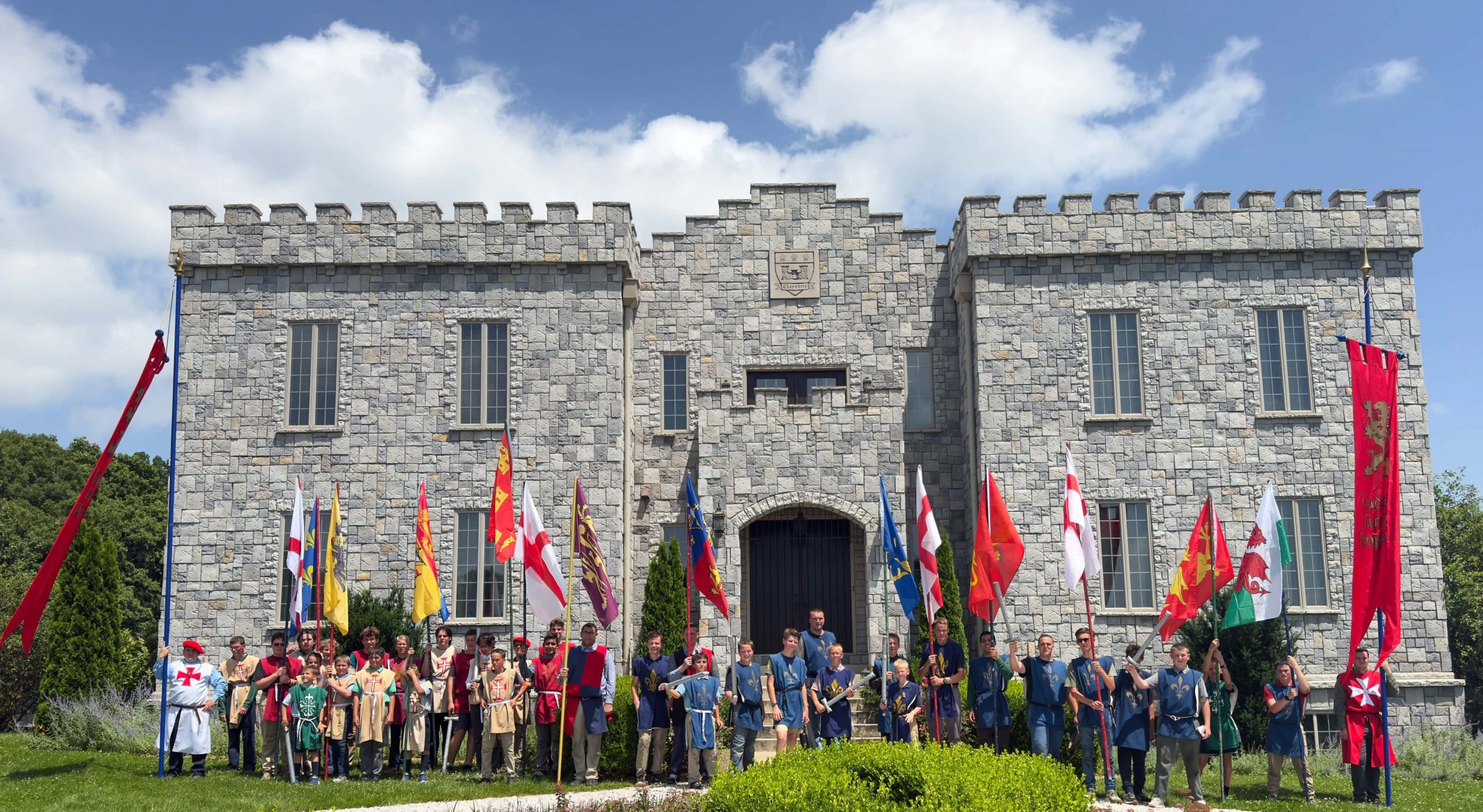
Leave your TikTok, video games, and smartphones behind and … soar like an eagle into the world of saints, swords, and knighthood.
Get information about the next camp here.
Soldiers of Christ
At a time when society tells boys to seek comfort rather than sacrifice and entertainment rather than virtue, the Call to Chivalry presents a radically different ideal: the noble calling to become a Soldier of Christ.
For ten unforgettable days, the Pennsylvania camp challenged a new generation of boys to grow spiritually, intellectually, and physically. From the moment the stirring sound of bagpipes awakened the campers each morning, the boys entered a world where faith, discipline, adventure, and camaraderie formed a harmonious whole.
But the camp’s purpose extends far beyond recreation or anachronistic role play. Its mission is to form boys in the virtues that once inspired the great saints, crusaders, missionaries, and defenders of Christendom. Each day begins with prayer. Rosary processions, chapel visits, and talks on the lives of saints established a supernatural foundation for daily activities.

The TFP Call to Chivalry Summer Camp presents a radically different ideal: the noble calling to become a Soldier of Christ.
Inspired by the Saints
The historic theme of the camp, which varies from year to year, was The Cross and Crown: Holy Heroes of the British Isles. Thus, skits and talks focused on heroic figures such as St. Patrick, St. George, St. Brendan, St. Thomas More, St. Edmund Campion, and the Jesuit Martyrs. Participants also enjoyed enthralling presentations about abbeys and cathedrals, knights and battles, culture and adventure, ceremony and pageantry.
Far from finding these topics dull, the campers embraced them enthusiastically. One of the most encouraging aspects of the program was witnessing the boys’ keen interest in the lives of saints and the history of Christian civilization. Questions often continued long after the lectures had ended.
Educational endeavors were balanced by physical activities and wholesome recreation. Archery, fencing, sword battles, hiking, treasure hunt, field games, paintball, and medieval games kept the young men constantly engaged.
Whether learning proper table manners, maintaining orderly bedrooms, standing at attention in formation, or working together during demanding competitions, the boys were practicing virtues that modern society frequently neglects: discipline, respect, perseverance, honor, and charity.
Pro-Life Generation
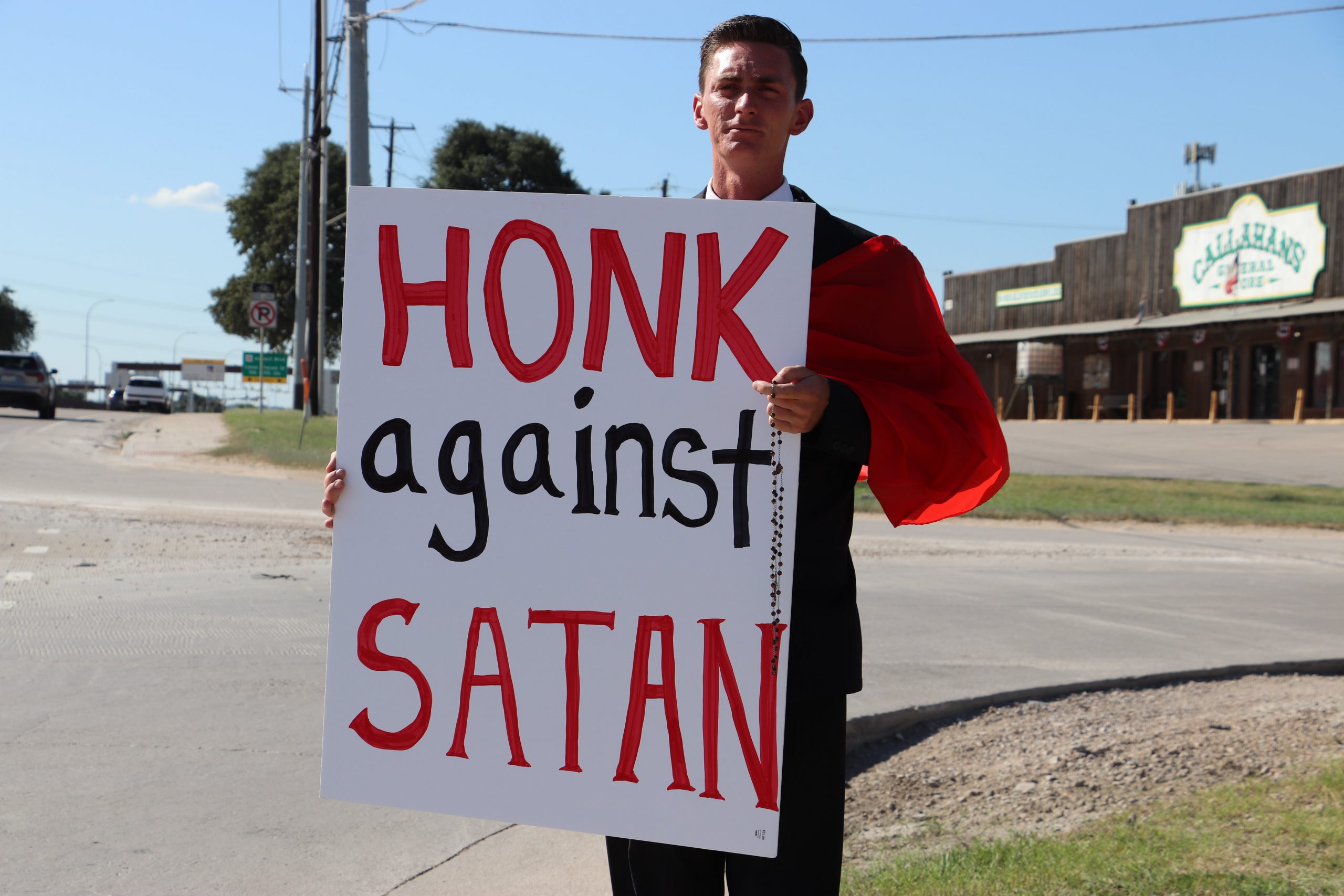
The connection between faith and action was nowhere more visible than during the camp’s public pro-life campaigns. Twice during the program, the boys left the academy grounds to take their convictions into the public square. One campaign took place at a busy intersection in Camp Hill, Pennsylvania. Another was held in Lewisburg near Bucknell University.
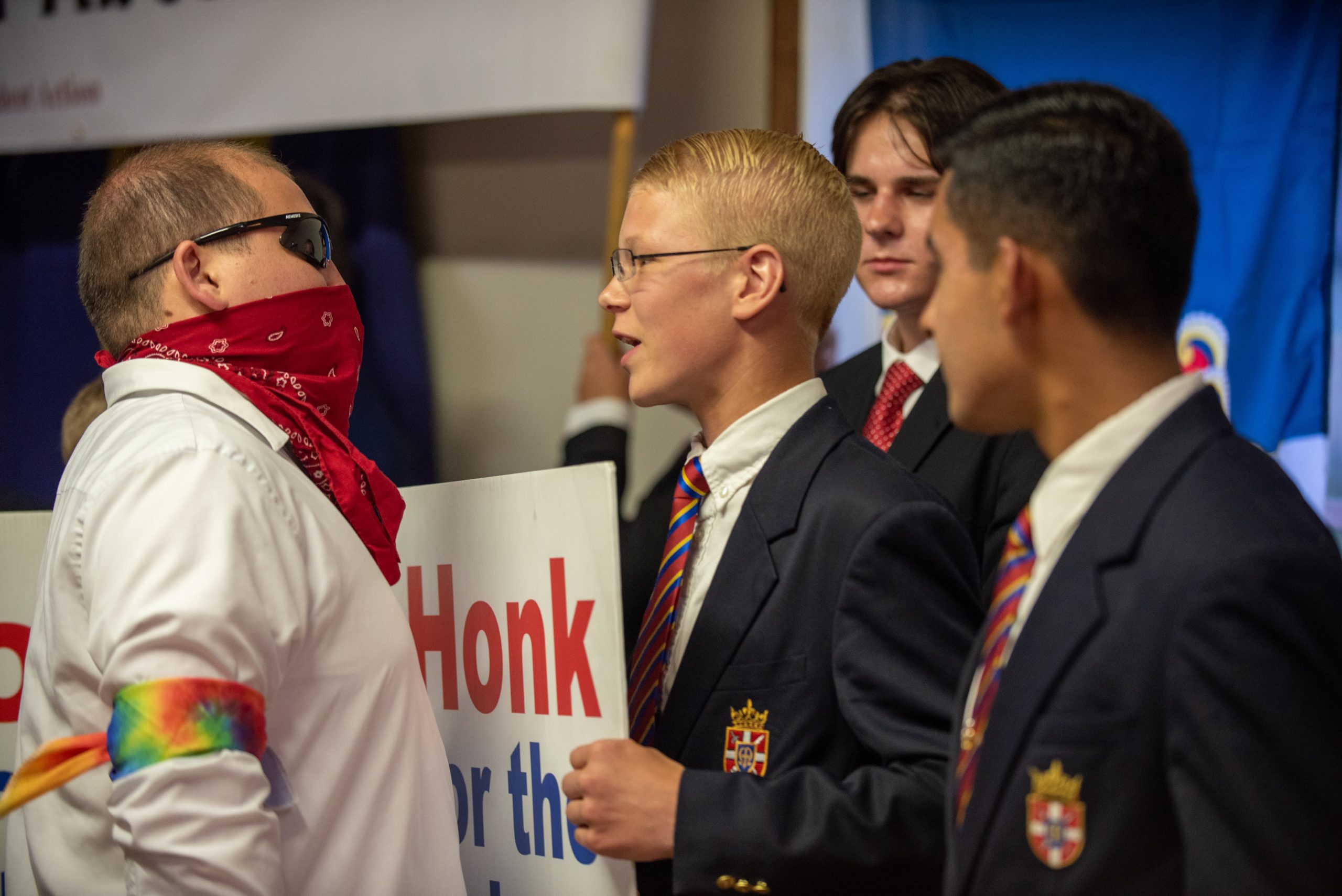
To be a modern pro-life knight, you must train how to defend the unborn from the culture of death.
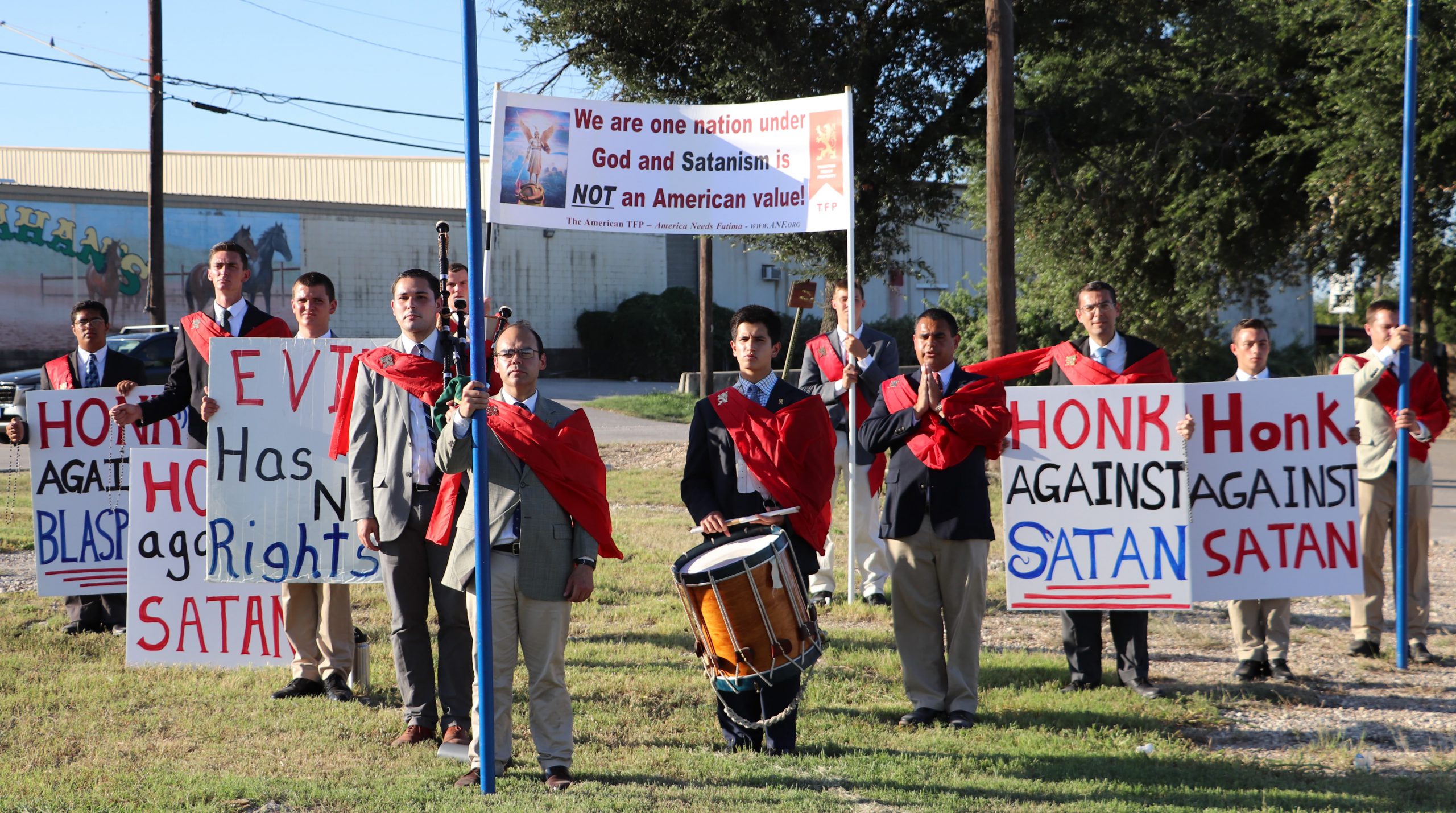
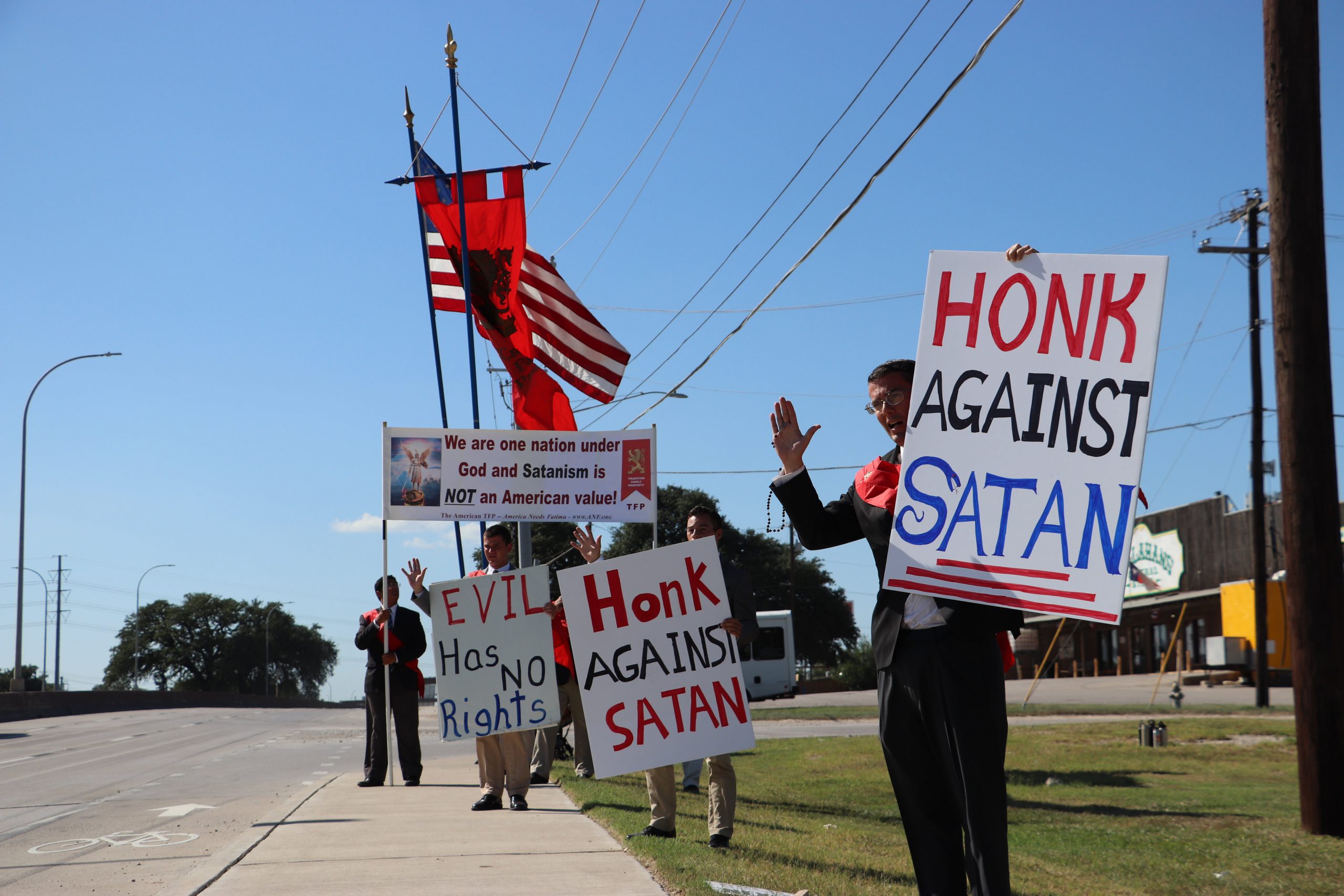
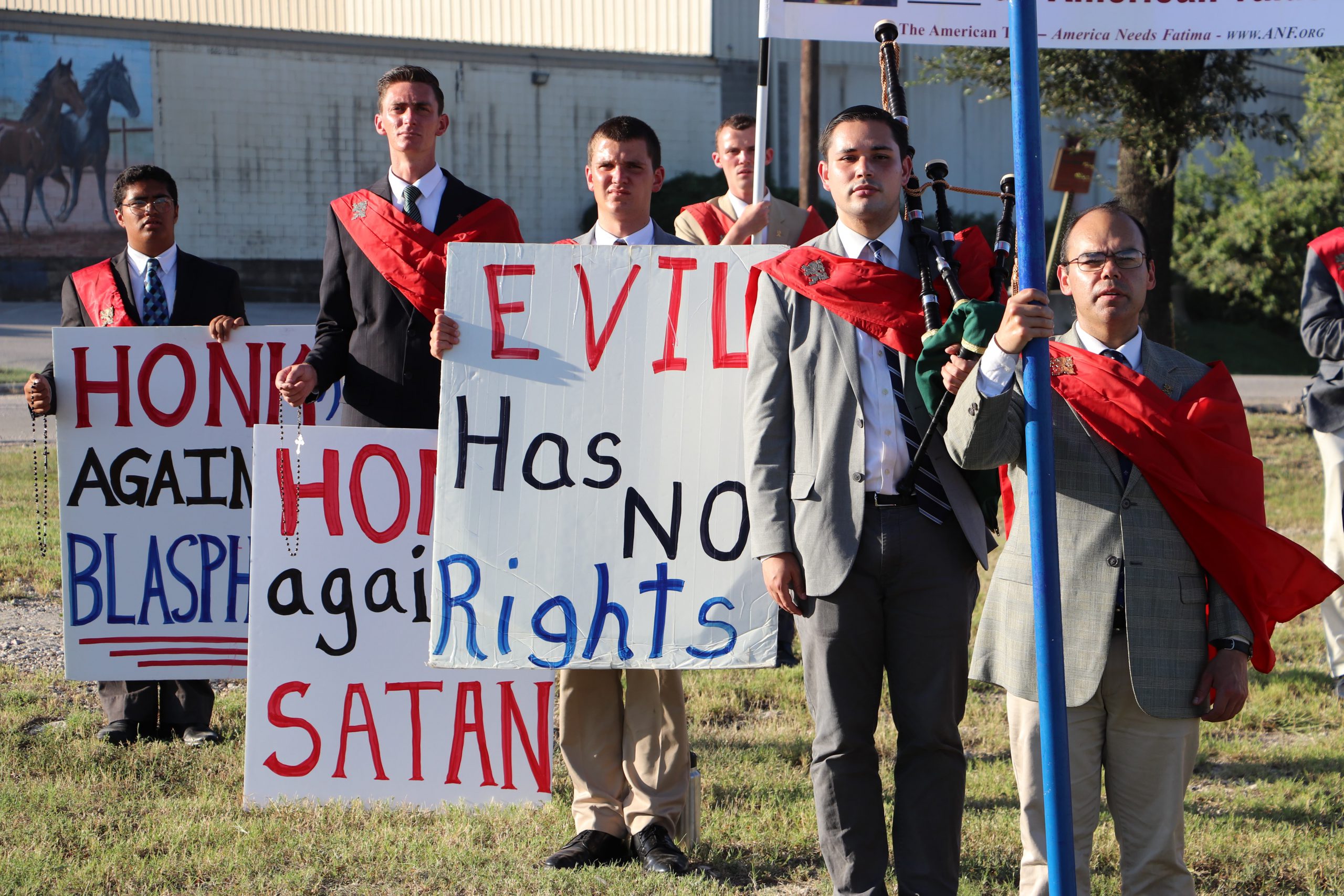
Sixty young men standing in the public square under the hot sun naturally sparks conversations. Add to that the recitation of the rosary, pro-life signs, banners, flags, bagpipes and drums, and cheerful voices singing God Bless America, and you have a good example of chivalry in action, and a sight difficult for the casual observer to forget.
Vehicles honked in support. Passersby stopped to ask questions. Impromptu conversations about the need to defend innocent life took place. The sight of dozens of young men standing for the unborn provided a powerful witness in a society where too many souls remain silent and fearful to stand out.
However, these boys sense that they are living the spirit of modern-day chivalry when they defend the innocent and oppose the sin of abortion. They accept the honor of being the voice of the voiceless with joy and enthusiasm and frequently ask, “When is the next one?”
The pro-life campaigns became practical lessons in courage, teaching participants that chivalry is not merely a chapter in a history book but a living reality.
Catholic Camp for Fathers and Sons
The camp’s emphasis on fathers’ participation further strengthened this formation. One of the aspects of the Call to Chivalry program is the encouragement given to fathers to participate alongside their sons. Throughout the camp, dads assisted with activities, prepared meals, attended talks, and contributed to the unique atmosphere.
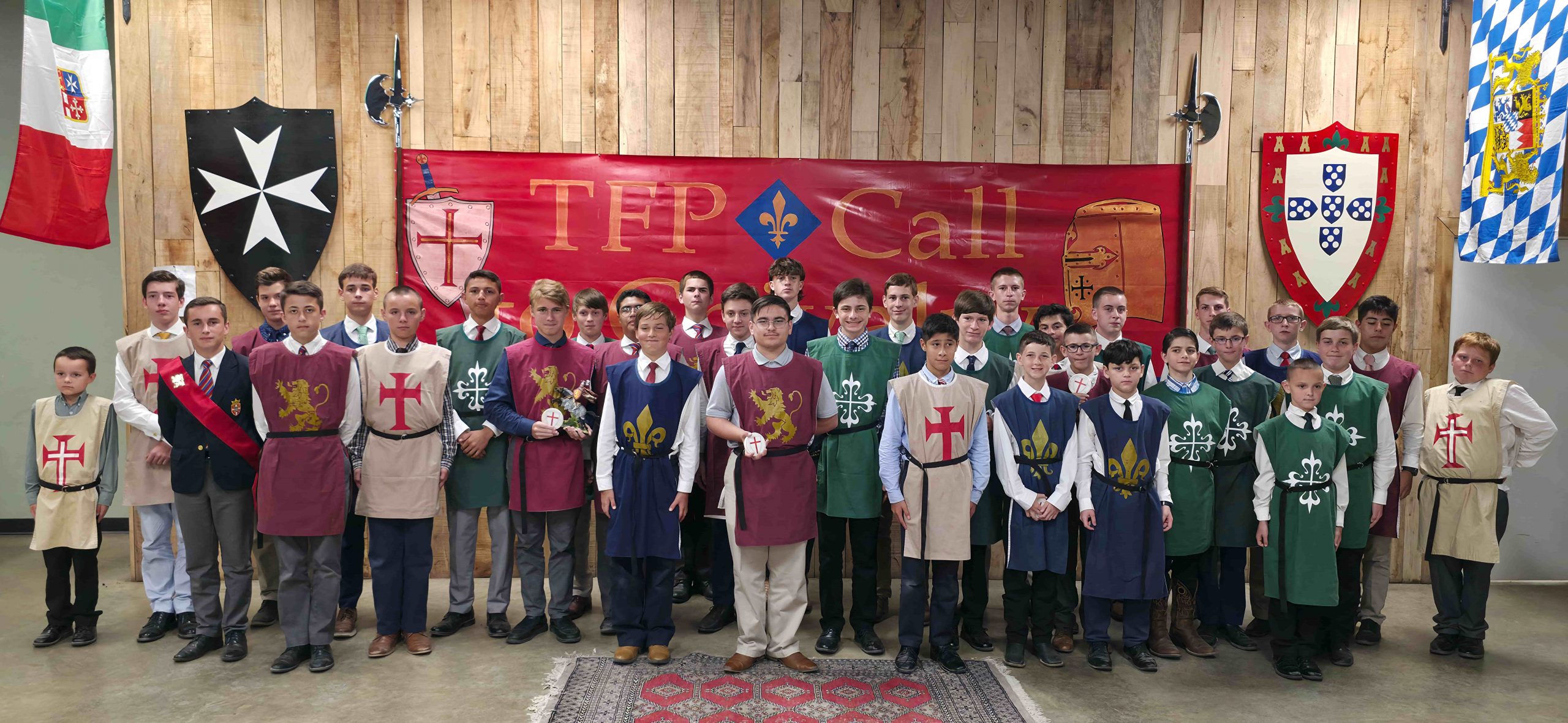
Many parents ask a pressing question: Where can boys grow into men of God?
Their presence reinforced an important truth: virtue is learned not from screens or social media but from the example of good men. Whether making homemade pizza or praying with their sons, the fathers became active role models in shaping the souls of their sons.
The spiritual dimension of the camp reached its summit during the Vigil of Arms. Throughout the night, boys took turns praying before a relic of the True Cross. Groups voluntarily sacrificed sleep to spend time in prayer, recalling the custom of knights who kept ceremonious vigil in preparation for knighthood.
Our Lord and Our Lady at the Center
Such moments revealed that the camp’s deepest purpose is not simply to teach history or develop skills but to foster a lasting devotion to Our Lord and Our Lady.
This goal was beautifully expressed on the final evening of the Pennsylvania camp. Following a solemn rosary procession, the boys gathered for a medieval banquet complete with banners, armor, music, and ceremony. The festivities concluded with a stirring presentation of King Henry V’s famous Saint Crispin’s Day speech.
Yet even amid the excitement, organizers reminded the campers that the ultimate purpose of chivalry is neither adventure nor glory. Its highest purpose is devotion to the Queen of Heaven, Our Lady.
Throughout the week, the boys learned that every virtue, every challenge, and every victory finds its true meaning beneath the Blessed Virgin Mary’s maternal protection. Under her banner, young men discover the strength needed to resist the temptations of the modern world and remain faithful to Our Lord.
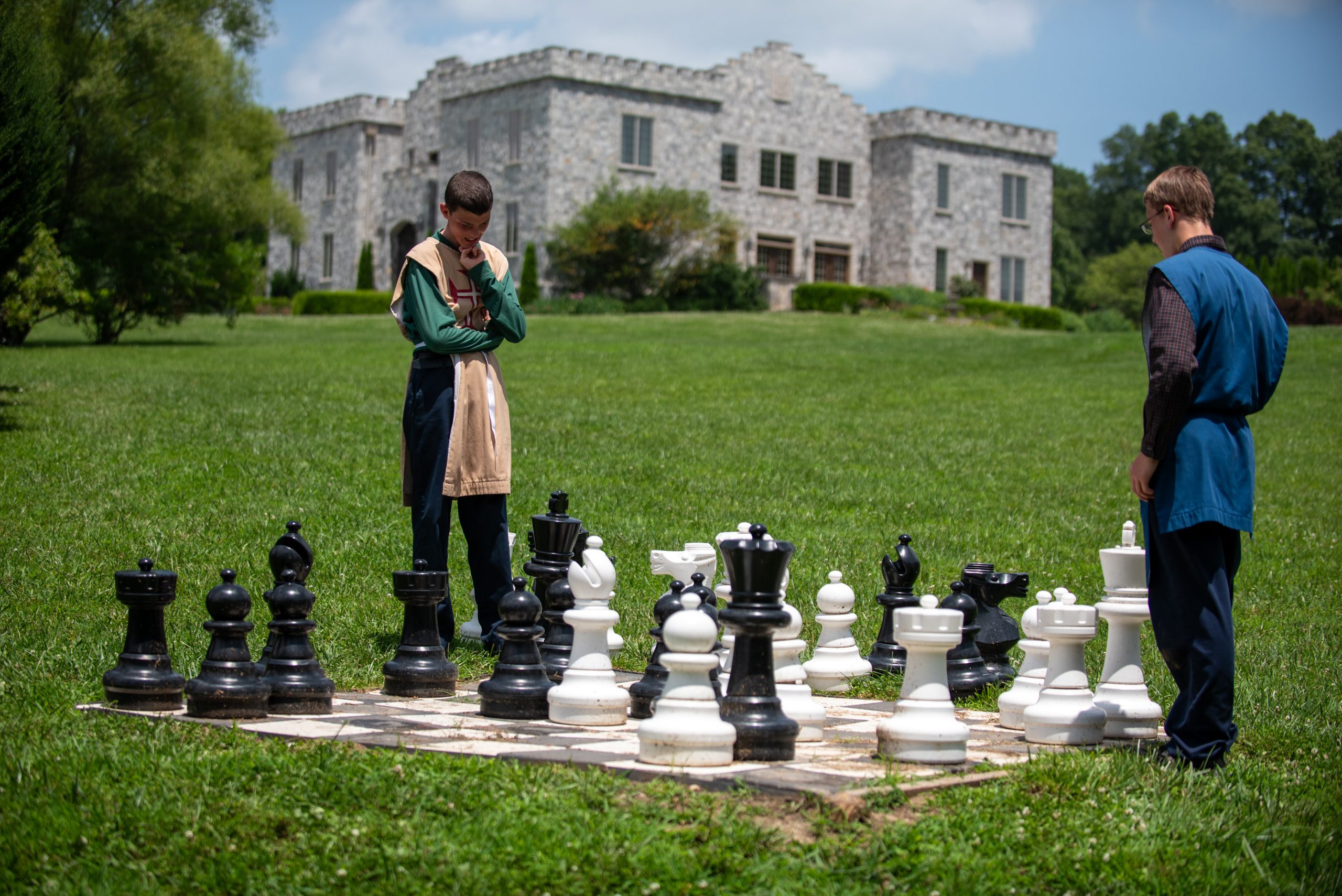
Chess tournament… with a difference.
As the camps in Pennsylvania, Louisiana, and Indiana concluded another successful season, their importance is clear.
Manhood is About Virtue
We live in an age desperately in need of virtuous men. Society suffers from a crisis of manhood, a loss of morals, and an abandonment of Christian ideals. Many young people are searching for meaning amid confusion and uncertainty.
The Call to Chivalry offers a compelling answer. It reminds boys that they are called not to worldly success measured by wealth, pleasure, or fame, but to the greatness of sanctity. It teaches them that courage, purity, sacrifice, and devotion remain as relevant today as they were in the age of the saints and crusaders.
In short, the Call to Chivalry is more than a summer camp. It is a school of Catholic manhood—a place where young hearts learn to love God, honor Our Lady, defend the innocent, and answer the call to become Soldiers of Christ.
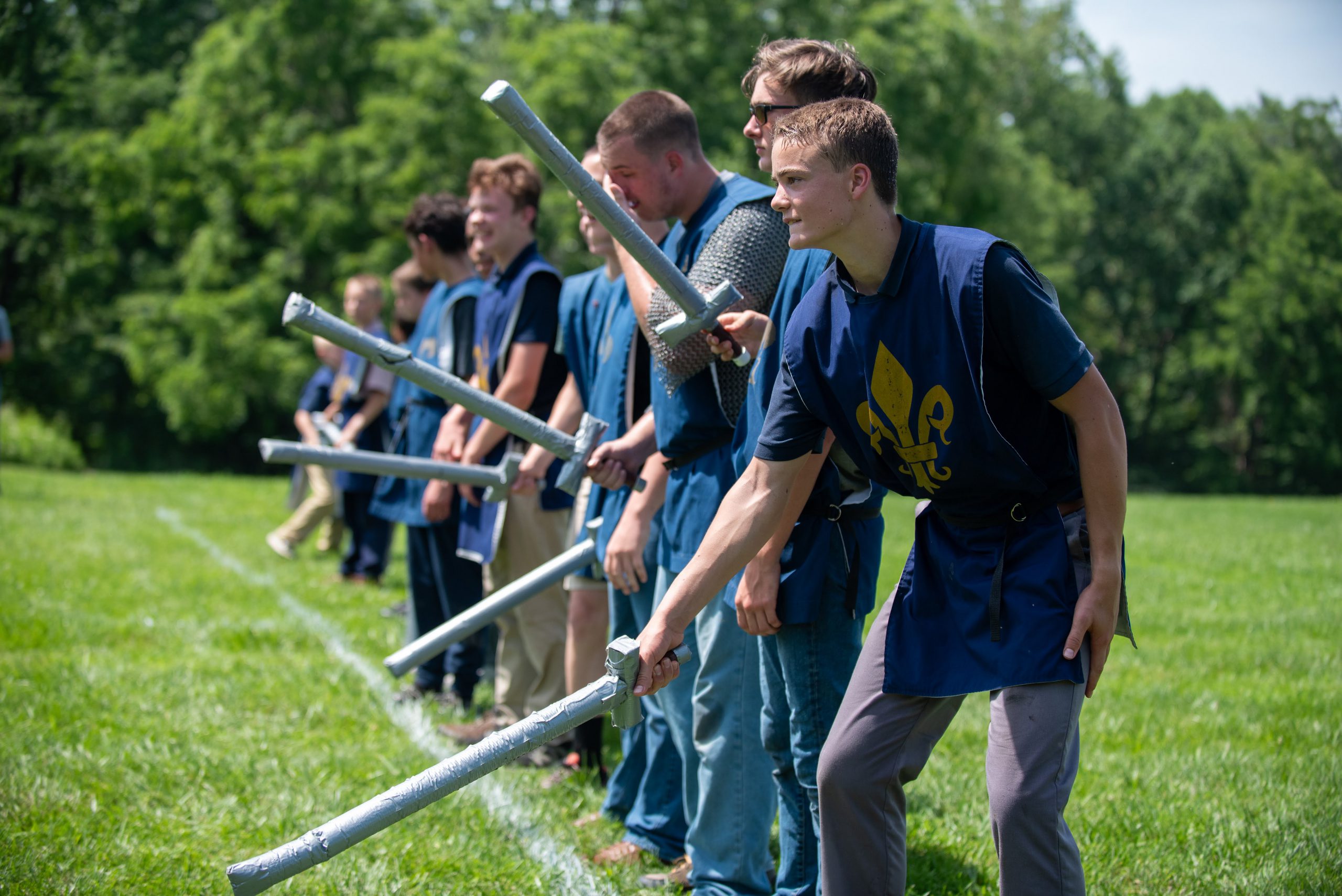
“Boys become men through many means, but especially through hard work, challenge, and sacrifice”. (written comment from one of the Dads)
Get information about the next camp here.
What Parents Say About the Camp
I was so impressed with the 2026 Chivalry Camp that I’ve decided to visit the St. Louis de Montfort Academy this year. The TFP Camp leaders were the type of Catholic gentlemen I want influencing my sons. They held the boys to a high standard, exemplified reverence for God, organized bold and godly public witness for the boys, provided high-level educational talks about history and saintly witness, and on top of all of this, finished each day with a beautiful meal and a rosary procession.
My boys benefited more from one Chivalry camp than months of school. The camp did prove to show improvement in maturity in both of my sons. Every boy should experience a TFP Chivalry Camp. My boys will assuredly join the camp next year, and I am forever grateful to God for this experience.
— Joe L.
My husband and I are grateful for your hard work directing the TFP Call to Chivalry Camp that our son attended. He loves the saint stories, midnight vigils (the relic of the True Cross of Our Lord is very special to him), the lovely food and, of course, fencing and games!
I am sure it is challenging to create and maintain a faithful Catholic camp experience for these young men — you are doing a great job!
— Rachael V.
Thank you for helping give my son this wonderful, blessed opportunity… God is great!! For years I looked forward to Zack being old enough to attend TFP camps. He’s now been attending for years and he absolutely loves everything about it. Thank you. Thank you to every leader.
— Aimee M.
I just want to take a moment and thank you and all the wonderful people involved in the Chivalry Camp last week in Pennsylvania. I am exceedingly grateful for all you do for our young men during these troubling times. I know that my son is learning to love God and His Mother more and more and also learning about the true battle going on for his soul and civilization. It is a relief to know I’m not in this battle alone for the souls of my children.
— Amanda
Thank you again. Brad has been telling us so many great stories of his exciting adventures at TFP. Hope to see you next year.
— Chris B.
I just wanted to thank you and all the directors and counselors for the wonderful experience my son had at Chivalry Camp. He came home more on fire with faith than I have ever seen him. He is still brimming over with stories of saints and dedication to prayer (especially the Rosary). Not to mention all the games he is teaching us! He was one of the youngest, and also a new convert, so I was nervous about how he might handle it. But everyone made him feel so welcome. The structure and discipline made such an impact on him — I can see him trying to be more of a gentleman. He’s already talking about coming back next year. Thank you so much for all that you do. It must be very hard work, but I can tell you it is worth it!
— Melissa F.
I thank you for the opportunity that the Call to Chivalry Camp has provided. They enjoyed the camp immensely. On their return I noticed a peace about them. They seemed more thoughtful. I am especially grateful for the strong Catholic stand you encourage in the young men.
— Brenda
It is wonderful to have a chance for teen Catholic boys to meet other boys their age also from strong Catholic families and just be able to be around other boys and men having important discussions and doing real things for the faith — with adventure and much enthusiasm.
— Patrice J.
The Call to Chivalry Camp was a formative experience for my son. Boys do not simply become men. In a culture that is hostile to true manhood, boys are all too often given incentives to remain immature and irresponsible–or even to become cowardly, complacent, and effeminate. Boys become men through many means, but especially through hard work, challenge, and sacrifice.
The Call to Chivalry Camp gives boys a small taste of how to become the men God has created them to be. Thank you for your efforts–and the efforts of all those involved in the camp–in providing a time and place for boys to learn to embrace manhood with courage and conviction.
Pax Christi,
— Jeffrey L.